
Crooked teeth are usually corrected with orthodontic treatments such as braces or clear aligners. However, in some cases, dental implants can help restore alignment, particularly when teeth are severely damaged, missing, or structurally compromised.
Dental implants do not move natural teeth as orthodontic treatments do. Instead, they replace teeth that cannot be restored and allow dentists to position replacement teeth in ideal alignment. This can improve bite balance, restore chewing function, and enhance the overall appearance of a smile.
Understanding when implants may help improve alignment and when orthodontic treatment is the better option requires a thorough dental evaluation. Dentists assess bone health, gum condition, bite stability, and the condition of the existing teeth before recommending the most appropriate treatment.
Key Takeaways
- Crooked teeth can develop due to genetics, jaw size differences, childhood habits, trauma, or tooth loss.
- Dental implants do not move teeth like braces or clear aligners.
- Implants replace missing or severely damaged teeth and can improve overall bite alignment in certain cases.
- Full‑arch implant treatments such as All‑on‑Four can restore both aesthetics and chewing function when many teeth are failing.
- A comprehensive dental evaluation is required to determine whether implants are appropriate for correcting functional problems.
What causes teeth to become crooked in the first place?
Crooked teeth rarely develop suddenly. In most cases, misalignment occurs gradually as the jaw grows, teeth erupt, and daily habits influence how the bite develops. Some people notice mild crowding during adolescence, while others experience shifting later in life due to tooth loss or trauma. Understanding the root causes of crooked teeth helps determine the most effective treatment approach.
Dentists typically evaluate several structural and environmental factors when diagnosing crooked teeth. These include genetic influences, jaw development, bite alignment, and the long‑term impact of oral habits. Often, crooked teeth result from multiple factors acting together rather than from a single cause.
Genetic factors
Genetics plays a major role in the development of teeth and jaws. Many patients inherit jaw structure and tooth size from their parents. If a person inherits larger teeth but a smaller jaw, there may not be enough room for all teeth to align properly. As teeth erupt, they begin to compete for space, resulting in crowding or rotation.
Some of the most common inherited traits that affect tooth alignment include:
- Small jaw structure
- Large tooth size
- Irregular tooth eruption patterns
- Inherited bite problems, such as overbite or underbite
When these genetic characteristics combine, teeth may erupt in overlapping or misaligned positions. Crowding caused by inherited jaw structure is one of the most common reasons people require orthodontic treatment.
| Genetic Factor | Impact on Teeth | Possible Result |
|---|---|---|
| Small jaw | Limited space for teeth | Crowding |
| Large teeth | Teeth compete for space | Overlapping teeth |
| Inherited bite pattern | Upper and lower jaws misalign | Overbite or underbite |
| Delayed eruption | Teeth emerge irregularly | Rotated teeth |
Bite misalignment
Another major cause of crooked teeth is malocclusion, a term dentists use to describe misalignment between the upper and lower jaws. Even if teeth initially erupt relatively straight, an uneven bite can slowly shift their position over time.
Common bite problems include overbite, underbite, and crossbite. These conditions place uneven pressure on certain teeth when chewing. Over time, this pressure causes gradual movement that can lead to crowding or shifting.
Dentists often analyze bite alignment using digital scans and X‑rays to determine whether orthodontic treatment or restorative procedures are necessary.
Trauma
Injuries to the mouth can also contribute to crooked teeth. A sports accident, fall, or direct impact to the jaw may cause teeth to shift from their original position. Even a minor displacement can lead to long‑term changes in alignment if neighbouring teeth begin to move into new spaces.
Examples of trauma‑related changes include:
- Teeth drifting into the space left by a lost tooth
- Jaw fractures affecting bite positioning
- Damage to the supporting ligaments that stabilize teeth
Without proper treatment, these changes may gradually worsen as chewing forces redistribute across the bite.
Childhood habits and environmental factors
Certain childhood habits can also influence how teeth develop. When pressure is repeatedly applied to developing teeth and jaws, it can alter their growth pattern.
Common habits that contribute to crooked teeth include:
- Thumb sucking beyond early childhood
- Prolonged pacifier use
- Tongue thrusting during swallowing
- Chronic mouth breathing
If these habits continue during critical stages of development, they may push teeth forward or create gaps between them.
Tooth loss and shifting
Crooked teeth can also develop later in life after a tooth is lost. When a tooth is removed or falls out due to decay or gum disease, neighbouring teeth begin to drift toward the empty space. This natural movement can lead to new crowding or bite imbalance.
Over time, the entire dental arch may change shape. In some cases, missing teeth contribute to bite collapse, which affects both function and facial appearance.
Can dental implants actually fix crooked teeth?
Dental implants are one of the most advanced treatments for replacing missing teeth. However, many patients wonder whether implants can also correct crooked teeth. The answer depends on the specific situation.
Unlike braces or clear aligners, dental implants do not move natural teeth. Instead, they replace missing or beyond-repair teeth. Because implants are anchored directly into the jawbone, they remain fixed in place once the healing process is complete.
How dental implants work
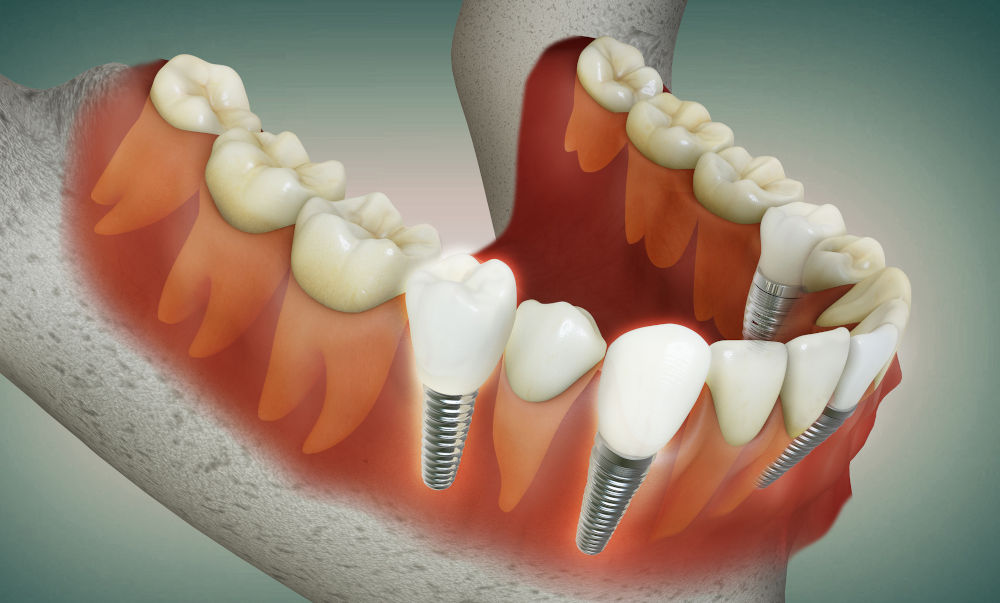
A dental implant is a small titanium post that is surgically placed into the jawbone. This post acts as an artificial tooth root. Over time, the implant integrates with the surrounding bone in a process called osseointegration. Once healing is complete, a crown, bridge, or full‑arch prosthetic is attached to the implant.
This structure allows implants to restore both the appearance and function of natural teeth. Because the implant becomes part of the jawbone, it provides strong and stable support for the restoration.
Common misconception: implants straighten teeth
One common misconception is that implants can align teeth the same way braces do. In reality, implants cannot move teeth. Orthodontic treatments apply controlled pressure to gradually shift natural teeth into proper positions. Dental implants, on the other hand, remain stationary after placement.
Dr. Rob Eisen, DDS, explains an important aspect of implant treatment:
"The mistake some patients make is thinking that because it's not removable, it's maintenance‑free. It's the opposite — it requires dedicated hygiene, just like natural teeth."
This perspective highlights that implants function as permanent restorations rather than orthodontic tools.
Situations where implants may improve alignment
Although implants cannot directly straighten teeth, they can improve the overall alignment of a smile in certain situations. If a tooth is severely damaged, rotated, or structurally compromised, removing it and replacing it with an implant may restore balance to the dental arch.
Examples include:
- Severely damaged teeth that cannot be restored
- Teeth lost due to trauma
- Multiple failing teeth affecting bite stability
In these cases, implants are placed in ideal positions to support a more balanced bite.
Orthodontics vs implants
| Treatment | Primary Purpose | Moves Teeth | Best For |
|---|---|---|---|
| Braces or aligners | Reposition natural teeth | Yes | Crowding and spacing |
| Dental implants | Replace missing teeth | No | Tooth loss |
| Full‑arch implants | Restore the entire dental arch | No | Multiple failing teeth |
For patients with otherwise healthy teeth, orthodontic treatment is often the preferred option. When teeth are severely damaged or missing, implants may provide a more stable long‑term solution.
When does replacing crooked teeth with implants make sense?
While many alignment issues can be corrected with orthodontics, there are situations where replacing crooked or failing teeth with implants may be the most effective approach. Dentists typically consider implants when misalignment occurs alongside severe damage, tooth loss, or advanced dental disease.
Severe crowding
In some cases, teeth overlap or rotate so significantly that orthodontic correction becomes extremely complex. Severe crowding may occur when the jaw is too small for the total number of teeth. Over time, crowded teeth can become difficult to clean, increasing the risk of decay and gum disease.
If certain teeth are severely compromised, removing them and replacing them with implants placed in ideal positions may restore proper spacing and bite balance.
Tooth loss
Missing teeth are one of the most common reasons dentists recommend implants. When a tooth is lost and not replaced, surrounding teeth gradually shift toward the empty space. This movement often causes additional crowding and bite problems.
Dental implants prevent these changes by filling the gap and stabilizing the surrounding teeth.
Bite collapse
When multiple teeth are damaged or missing, the vertical dimension of the bite may collapse. This means the upper and lower jaws move closer together than they should, which affects chewing function and facial structure.
Full‑arch implant restorations can rebuild the proper bite height and restore overall alignment.
Step‑by‑step guide to implant replacement
- Comprehensive dental evaluation
- Digital imaging and treatment planning
- Removal of severely damaged teeth if necessary
- Implant placement in the jawbone
- Healing period for bone integration
- Placement of the final crown or prosthetic restoration
Dr. Amir Guorgui BSc, DMD, MACSD explains the importance of careful planning:
"Same‑day implants can be incredibly effective, but only in the right scenario. Trying to force an implant into a compromised site is asking for trouble."
When implants may be the best option
| Dental Condition | Why Implants Help |
|---|---|
| Missing teeth | Prevent shifting and restore chewing ability |
| Severe decay | Replace teeth that cannot be restored |
| Advanced gum disease | Stabilize bite after tooth loss |
| Bite collapse | Restore jaw alignment |
Successful treatment depends on evaluating the entire oral structure. Dentists consider bone density, gum health, and bite balance before recommending implants. In complex cases involving multiple failing teeth, full‑arch implant treatment may restore both function and aesthetics simultaneously.
How do dental implants for crooked teeth work?
Dental implants designed to replace crooked or severely damaged teeth follow a carefully planned clinical process. The goal is not to move existing teeth but to replace problematic ones with prosthetic teeth positioned in ideal alignment. Because implants are anchored directly in the jawbone, dentists can design the final smile with improved spacing, symmetry, and bite balance.
When crooked teeth are removed and replaced with implants, the prosthetic crowns can be placed in straighter positions than the original teeth. This means the final result can look significantly more aligned, even though natural teeth were not moved orthodontically.
Consultation and treatment planning
The process begins with a detailed consultation. During this stage, dentists evaluate several important factors, including the condition of the teeth, gum health, and jawbone density. Digital imaging, 3D scans, and bite analysis are typically used to plan implant placement with high precision.
Dentists also evaluate whether the crooked teeth should be preserved or replaced. In many cases, only severely compromised teeth are removed while healthy teeth remain.
Key diagnostic tools used during consultation include:
- Digital X-rays
- 3D cone beam CT scans
- Bite analysis
- Gum health evaluation
These tools allow the dentist to determine the exact angle and depth at which implants should be placed.
Implant surgery
Once the treatment plan is finalized, the implant surgery is performed. During this procedure, a titanium implant post is inserted into the jawbone where the natural tooth root once existed.
The implant then undergoes osseointegration, a biological process in which the surrounding bone fuses with the titanium surface. This integration provides the stability needed to support the final restoration.
The healing process typically takes several months, although temporary restorations may sometimes be used during this period.
Crown placement
After the implant has fully integrated into the bone, a custom dental crown is attached to it. This crown is designed to match the surrounding teeth in colour, shape, and size.
Because the crown is created using digital impressions, dentists can align it precisely within the dental arch. This allows the final tooth to appear straighter and more balanced than the original crooked tooth.
Implant treatment process overview
| Treatment Stage | Purpose | Key Outcome |
|---|---|---|
| Consultation | Evaluate teeth, gums, and bone | Personalized treatment plan |
| Implant placement | Insert a titanium implant in the jawbone | Artificial tooth root created |
| Osseointegration | Bone integrates with the implant | Long-term stability |
| Crown placement | Attach a custom prosthetic tooth | Restored function and aesthetics |
When performed correctly, this process results in a restoration that looks natural and functions similarly to a healthy tooth.
What are the benefits of replacing crooked teeth with implants?
Replacing severely crooked or damaged teeth with dental implants can provide several functional and structural advantages. Unlike temporary solutions such as removable dentures, implants integrate with the jawbone and function similarly to natural teeth.
Patients often choose implants because they offer long-term stability and can improve overall bite alignment.
Improved bite alignment
When crooked teeth are replaced with properly positioned implants, the distribution of chewing forces becomes more balanced. This can reduce uneven pressure on neighbouring teeth and help stabilize the bite.
A balanced bite can also improve chewing efficiency and reduce strain on jaw joints.
Long-term stability
Dental implants are designed to last many years when properly maintained. Because they fuse with the jawbone, they provide a stable foundation that does not shift like removable prosthetics.
Clinical studies have shown that implants have high long-term success rates when placed in patients with healthy bone and gums.
Natural aesthetics
Implant-supported crowns are designed to replicate the appearance of natural teeth. Dentists carefully shape and colour-match the crown so that it blends with surrounding teeth.
For patients with visibly crooked or damaged teeth, this can significantly improve the appearance of their smile.
Bone preservation
One of the most significant benefits of dental implants is their ability to preserve bone structure. When a tooth is lost, the jawbone in that area begins to shrink due to a lack of stimulation. Implants replace the root of the tooth, which helps maintain bone density.
Benefits overview
| Benefit | Explanation | Long-Term Impact |
|---|---|---|
| Improved bite alignment | Teeth are positioned more evenly | Better chewing function |
| Stability | Implant fused with bone | Long-lasting restoration |
| Aesthetic improvement | Natural-looking crown | Improved smile appearance |
| Bone preservation | The implant stimulates the jawbone | Prevents bone loss |
These benefits make implants one of the most comprehensive restorative solutions available in modern dentistry.
Who is a good candidate for dental implants when teeth are crooked?
Not every patient with crooked teeth is automatically a candidate for dental implants. Because implant placement involves surgery and bone integration, dentists must carefully evaluate several biological factors before recommending treatment.
Bone density
Adequate jawbone density is one of the most important requirements for implant success. The implant must have enough bone structure to anchor securely. If bone loss has occurred, procedures such as bone grafting may be recommended before implant placement.
Gum health
Healthy gums are also essential. Active gum disease can compromise the stability of implants and increase the risk of complications. Dentists typically treat periodontal disease before considering implant surgery.
Number of teeth affected
The number of crooked or damaged teeth also influences treatment planning. Some patients may require only a single implant, while others may benefit from full-arch implant restorations if many teeth are failing.
Candidate requirements overview
| Candidate Factor | Why It Matters | Possible Solution if the Issue Exists |
|---|---|---|
| Adequate bone density | Supports implant stability | Bone grafting |
| Healthy gums | Prevents infection around the implant | Periodontal treatment |
| Good oral hygiene | Maintains implant health | Hygiene education |
| Number of damaged teeth | Determines treatment type | Single implant or full-arch restoration |
A thorough clinical evaluation allows dentists to determine the safest and most effective approach. In many cases, even patients who initially lack sufficient bone or gum health can become candidates after preparatory treatments.
Ultimately, the best candidates for implants are individuals with severely damaged, missing, or non-restorable crooked teeth who want a long-term, stable solution to restore both function and appearance.

What risks or limitations should patients know about before choosing implants?
Although dental implants have become one of the most predictable procedures in modern dentistry, patients should still understand the potential risks and limitations before choosing this treatment.
Surgical risks
Implant placement is a surgical procedure. As with any surgery, there are potential risks such as infection, nerve irritation, or complications during healing. These risks are relatively uncommon when the procedure is performed by experienced clinicians and proper planning is used.
Studies in implant dentistry report success rates above 90% in healthy patients, but outcomes can vary depending on bone quality, smoking habits, and overall health.
Healing time
Unlike some restorative treatments, implants require time for osseointegration. This healing phase allows the bone to fuse with the titanium implant and typically takes several months.
During this time, patients may wear temporary restorations while the implant integrates with the bone.
Cost considerations
Dental implants are often more expensive than alternative treatments such as bridges or removable dentures. However, implants are also designed to last significantly longer when maintained properly.
| Risk or Limitation | Explanation | Consideration |
|---|---|---|
| Surgical risks | Minor complications possible | Reduced with an experienced surgeon |
| Healing period | Bone integration required | Several months of healing |
| Cost | Higher initial investment | Long‑term durability |
| Health factors | Smoking or disease may affect success | Medical evaluation required |
Understanding these factors helps patients make informed decisions about treatment.
What should patients consider before deciding on implants for crooked teeth?
Choosing dental implants to replace crooked teeth involves several important considerations. Patients should evaluate their oral health, long‑term goals, and alternative treatments before making a final decision.
Health status
General health and oral health play a critical role in implant success. Conditions such as uncontrolled diabetes or severe gum disease may require treatment before implant placement.
Orthodontic alternatives
If crooked teeth are otherwise healthy, orthodontic treatment may be a more conservative option. Braces or clear aligners can reposition natural teeth without removing them.
Longevity and maintenance
Implants are designed to last many years, but they still require proper oral hygiene and regular dental visits. Patients should consider their commitment to long‑term maintenance.
| Decision Factor | Why It Matters | Possible Alternative |
|---|---|---|
| Cost | Higher upfront expense | Orthodontics or bridges |
| Health status | Affects healing | Medical management |
| Tooth condition | Determines restorability | Orthodontics |
| Longevity | Long‑lasting restoration | Removable prosthetics |
Evaluating these factors with a dentist helps determine the most appropriate treatment strategy.
What is the best solution for crooked teeth according to dental experts?
Dental experts generally agree that the best treatment for crooked teeth depends on the underlying cause and the condition of the affected teeth. There is no single solution that works for every patient.
For individuals with healthy teeth, orthodontic treatment remains the most common approach. Braces and clear aligners gradually move teeth into proper alignment without removing them.
However, when teeth are severely damaged, missing, or affected by advanced disease, restorative treatments such as dental implants may offer a more predictable long‑term outcome.
| Treatment Option | Best For | Main Advantage |
|---|---|---|
| Braces | Crowding and spacing | Preserves natural teeth |
| Clear aligners | Mild to moderate misalignment | Discreet treatment |
| Dental implants | Missing or severely damaged teeth | Long‑term stability |
| Full‑arch implants | Multiple failing teeth | Complete smile restoration |
Experts often emphasize the importance of individualized treatment planning. As Dr. Amir Guorgui explains, implant treatment works best when the clinical conditions are appropriate and when a comprehensive diagnostic process guides the decision.
Ultimately, the best solution is determined through professional evaluation that considers oral health, structural stability, and long‑term function.
Frequently Asked Questions
Can dental implants fix crooked teeth?
Dental implants do not straighten natural teeth. They replace missing or severely damaged teeth and can improve overall alignment when problematic teeth are removed and replaced with properly positioned implant restorations.
Are dental implants better than braces for crooked teeth?
Braces or clear aligners are usually the best option when natural teeth are healthy but misaligned. Dental implants are typically recommended when teeth are missing, severely damaged, or otherwise not restorable.
When do dentists recommend replacing crooked teeth with implants?
Dentists may recommend implants when crooked teeth are also affected by severe decay, trauma, advanced gum disease, or structural damage that makes them non-restorable.
Do dental implants help improve bite alignment?
Yes, implants can help stabilize the bite by replacing missing teeth and distributing chewing forces more evenly across the dental arch.
Who is a good candidate for dental implants for crooked teeth?
Good candidates usually have sufficient jawbone density, healthy gums, and at least one tooth that cannot be preserved. A dentist must perform a detailed evaluation before recommending implants.
What are the risks of dental implants?
Dental implants involve surgery and carry risks such as infection, implant failure, and healing complications. However, when performed by experienced dentists in suitable candidates, implants have a high long-term success rate.